Showing posts with label environment. Show all posts

Friday, July 15

Patagonian Adventure

It's hard to believe that it has been almost a year since my trip to Argentina. It's also hard to believe that I've been working at the job that sent me there for over two years. After thinking about it, I really should appreciate the opportunities that I've been given over those last two years, because it is a blessing that I've been able to do some of these things at the beginning of my career. Yes, there have been a lot of challenges and frustration - but any job can get stressful at some points. There's a lot to learn from dealing with these interpersonal relationships on a quasi-professional level. But I suppose that there are coworker-related challenges no matter where you work, unless you have no human interaction at all. And that's not exactly ideal either.

Some of the best memories I've made over the past two years have been while on work trips; I've made some really great friends that I wish lived much closer to me and that I could see more often. I've gotten to see Amsterdam, Paris, Oslo, and Buenos Aires. And there's no way I could have afforded to visit all of those places in such a short time span if I hadn't had the opportunity to visit through work.


View Argentinian/Chilean Vacation in a larger map

One of the most memorable trips was to Argentina in August 2010. I spent about a week in Buenos Aires attending the Standing Committee on Antarctic Research (SCAR) meeting, and I used up a week of vacation time to travel around Patagonia once Michael arrived. From Buenos Aires, we drove to Bahia Blanca, and then west across the entire country. Argentina is vast, and much of it is remote. Outside of Buenos Aires, the roads listed as highways on the map are one lane in each direction, which is always fun when drivers are passing huge trucks on the wrong side of the road. It's definitely an adventure to drive in Argentina.

Los Alerces Parque Nacional
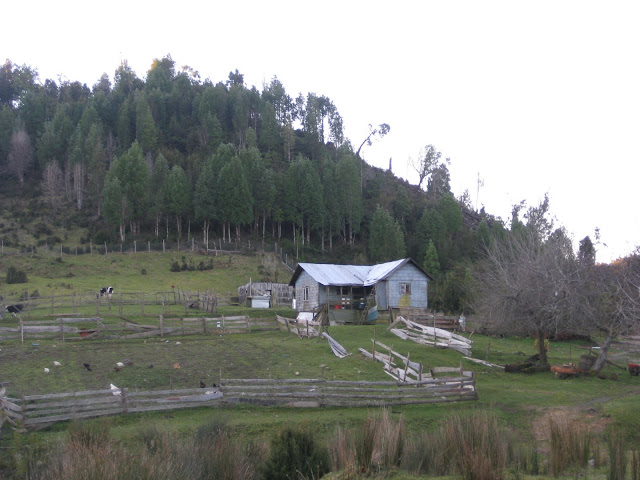
My parents had booked their timeshare for us to use in Esquel, and our first stop was Los Alerces National Park. The scenery was absolutely gorgeous -- huge mountains as a backdrop against a huge lake. Pictures honestly don't do it justice. It's so remote that there are only dirt roads in most of the park. There are also a few people who live inside the park and farm sheep and cows.

Our next stop was San Carlos de Bariloche, or just Bariloche. It's basically like the Aspen of Argentina -- some very high end shops, and definitely not where you want to be if you are planning on taking advantage of generally how cheap it is to eat out in Argentina compared to the U.S. Bariloche is a town/city on the edge of another beautiful lake surrounded by mountains. We ended up finding a very authentic German restaurant for dinner, which was delicious.

Bariloche
From Bariloche, we began our adventure to cross into Chile. I won't go into too much detail about our frustration, but we had a very hard time crossing the border. The only person working at the border who spoke English was very helpful/friendly - but oddly enough, his English was very good because he plays online video games with Americans - that's his only practice at the language. I thought it was a bit odd that he was using curse words as every third word until I realized that he probably thinks that all Americans talk that way. It's just a product of the people he has learned English from. So, after finally making it across the border, it was pretty amazing to see the change in the landscape. Apart from an ominous-looking volcano at Puyehue National Park, the land in Chile is very fertile with lots of farms and rolling hills.


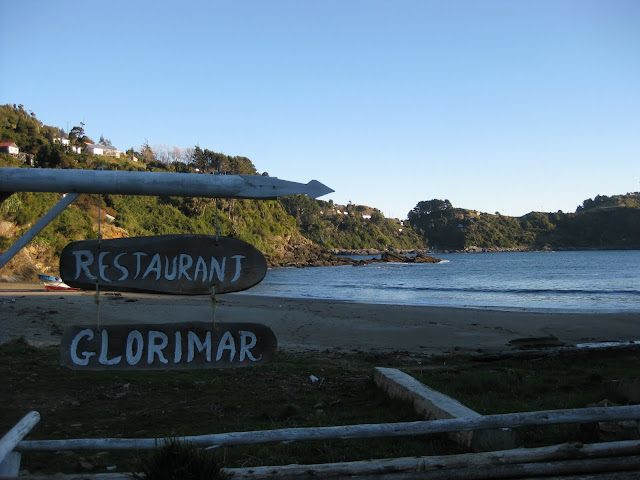
After a quick stop in Osorno, we headed to the coast -- upon reaching the dock at the little town, I asked a random old man for any good restaurants in the town. It was very exciting when he suggested the little seafood place right next to where we were overlooking the bay, which was run by his son and his son's wife. And the food was absolutely amazing. Although there was a bit of a communication issue when the lady kept saying what we were eating was called "loco". The only thing "loco" means to me in Spanish is "crazy"... not a type of animal. The word wasn't in the Spanish dictionary, either, so I just ate it - and it was delicious. Very fresh. And after returning home, I found out that loco is a type of Chilean abalone.


Once we were done with dinner, we realized that we wouldn't be able to make it back to the border with Argentina before it closed. In this area of Patagonia, there are a ton of little cabanas along the road, so we stopped into a few to ask about vacancies. We finally found one that was available for the night, and we stayed in a very cute cabana with two bedrooms for $25/night.


We headed back to Argentina the next morning. Deciding to see as much of Argentina as possible, we took a different route back to Buenos Aires, through Trelew and Puerto Madryn. The part of Argentina we drove through was breathtaking - basically like driving through a version of the Grand Canyon due to its vastness, just less deep.


I've never driven so much in a short period of time as this trip. For some reason I have the ability to not fall asleep while driving, even taking the "graveyard" shift... so I was always driving from around 2-5AM. Our rental car was very interesting... and not in a good way. It had no airbags, and it made this incredibly annoying high-pitched whining sound all the time. I'm fairly certain that I can no longer hear noises at that pitch, but I guess I had to have some kind of memorable "battle wound" from such an adventurous trip. After driving for about 24 hours straight (switching off with Michael), our trip ended with an exhausted half day in Buenos Aires before my flight back home.

Yum, pera.
There is a pear soda you can buy in Argentina that is absolutely refreshing and delicious. I really wish they sold it in the U.S. -- it's called Aquarius Pera. Argentinians definitely love to eat meat -- so I'm not so sure it would be an easy fit for vegetarians. The highlights of most menus were red meats -- beef and lamb, especially. The food is delicious, though. Argentinian wine is very good, and it's very cheap when you buy it locally.


As you drive along the roads, there are a bunch of little shrines along the side with little statues like this one. Our Argentinian friend at the border explained that some of these are just for prayer, but many of them are set up in remembrance of someone who has died at that location from a car accident.

I think the thing I love most about Patagonia is that it seems somewhat untouched. There are very few tourists (especially during the winter, when we were there). It just has this feeling like it is unexplored. Even though we were foreigners and rode into some poverty-stricken areas of towns at 2AM, we never had any dangerous experiences. Everyone I asked for help went out of their way to do so -- like the police officers who let us follow them to where we were staying in Esquel, or the shopkeeper in Cholila who patiently waited for me to ask him the same question over and over in Spanish and then repeat what he said back to him to make sure I understood.
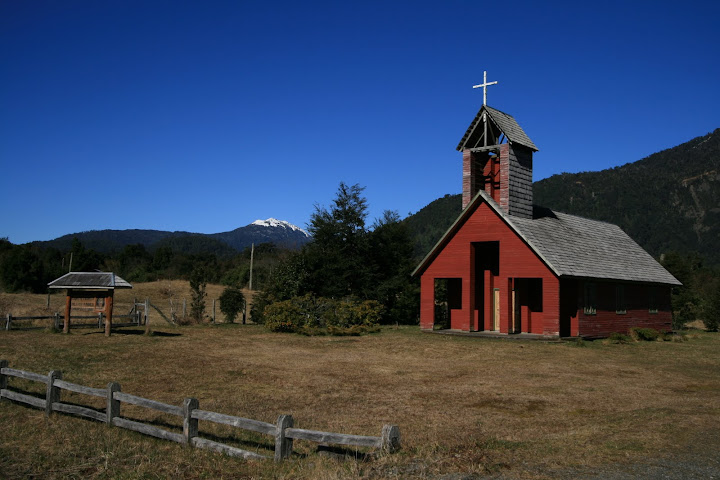

If you're looking for a location where you can learn about a completely different culture, meet incredibly friendly and patient people who won't get frustrated with your limited Spanish abilities, and spent an ample amount of time in a country where you can really get your money's worth, Argentina is the place to go. Some of the meals I had would have been 2-3x as expensive back home. Buenos Aires has the feel of a European city without the price. The Argentinian countryside is amazing and incredibly remote. I've never seen as many stars in the sky at once as when I was there. I saw sunsets with colors that do not have a name.

A selection of more from our thousands of pictures from this trip, and some from Buenos Aires, are available here.

Monday, July 11

SUP.

A month or so ago, I found a great deal on BuyWithMe for a standup paddleboarding (SUP) tour for two for $63. Michael and I redeemed the coupon on Saturday. SUPs are basically like large surfboards that you can stand up and paddle on. You can always sit on it and paddle too, if you're tired of standing.

We drove out to Chesapeake Beach, MD for a very early 7:30AM tour... and it takes an hour to get there.


View Chesapeake Beach, MD in a larger map


We arrived at the marina, and Camille met us there to start the tour -- just us and the tour guide! We paddled around the marina and down a little river for a while to get used to the feel of the paddle boards. The scenery was beautiful, with egrets and blue herons. Apparently the early morning tour was so highly recommended to me because of all the wildlife to see at that time of the day. It was quite warm, but the breeze coming off the ocean kept us cool.


Once we had fully acclimated to using the paddle boards, we paddled out to the bay. The movement of the water took a bit of getting used to, but it's a lot of fun. We got to go pretty far out in the bay and got a great view of the coastline. We finished up the tour by paddling up to a beach, and Camille had a wonderful breakfast prepared for us as part of the package. I definitely want to try SUPing again.


Apparently Chesapeake Beach used to be a very popular vacation destination for DC-ers, but the railroad that used to connect it with D.C. no longer runs. There's actually only one hotel in the area which burnt down around the time the railroad stopped running (it's rebuilt now), so that didn't help either. I would really consider this to be a great little getaway from the D.C. area -- it's relatively close, has a great beach, and is a very cute, quiet little town. Plus, you can try SUPing and kiteboarding through YK Kiteboarding.

Thursday, June 30

National Arboretum

It's strange to think that you can live practically right next door to something of great historical importance, and end up not seeing it for the years that you are there. While others may visit it from around the country, or around the world, someone living so close by just never goes to appreciate it.

I am one of those people.

I had a bunch of family in town this weekend, and we were looking for something to do that didn't involve a museum. So we ended up going to the National Arboretum. I seriously had no idea that this place even existed, but it has some fascinating artifacts/collections.

-The original columns and stairs from the Capitol building, which Abraham Lincoln stood on!


-The best collection of bonsai outside of Japan - some of them are more than 100 years old.

-A lemon tree with the biggest lemons I have ever seen.

-Very hungry koi fish that you can feed.

-Lots of other things that I didn't have time to check out, like the National Grove of State Trees, the trolley that takes you around to all the different areas, and the azalea gardens.

Another great part about it: it's dog friendly! And I really like being able to take my dog places.

Monday, March 28

Rockhopper Penguins in Rehab

Have you ever wondered what is actually involved in cleaning up after an oil spill? I found this slide show on the BBC News website to be very interesting. I hadn't even heard about this recent oil spill!


According to Wikipedia:
On March 16, 2011, the Maltese-registered freighter MS Oliva ran aground on Nightingale Island, spilling tons of heavy crude into the ocean. The crew was rescued, but the ship broke up, leaving an oil slick that surrounded the island, threatening its population of rockhopper penguins.  Nightingale Island has no fresh water, so the penguins are being transported to Tristan da Cunha for cleaning.

Monday, March 7

Topping Off the Tank

Some very important and interesting facts from the EPA:

-When the gas pump nozzle clicks off automatically, do you add a little more gas to round off your dollar sale?
Topping off your gas tank is bad for the environment and your wallet.

  • Topping off the gas tank can result in your paying for gasoline that is fed back into the station's tanks because your gas tank is full. The gas nozzle automatically clicks off when your gas tank is full. In areas of ozone nonattainment, gas station pumps are equipped with vapor recovery systems that feed back gas vapors into their tanks to prevent vapors from escaping into the air and contributing to air pollution. Any additional gas you try to pump into your tank may be drawn into the vapor line and fed back into the station’s storage tanks. 
  • You need extra room in your gas tank to allow the gasoline to expand. If you top off your tank, the extra gas may evaporate into your vehicle’s vapor collection system. That system may become fouled and will not work properly causing your vehicle to run poorly and have high gas emissions.
  • Gasoline vapors are harmful to breathe. Gasoline vapors contribute to bad ozone days and are a source of toxic air pollutants such as benzene. Evaporation from the spillage of gas from overfilling can occur, contributing to the air pollution problem. Remember you pay for the gas that evaporates or is spilled on the ground.
  • Topping off your gas tank may foul the station's vapor recovery system. Adding more gas after the nozzle has automatically shut off can cause the station's vapor recovery system to operate improperly. This contributes to the air pollution problem and may cause the gas pump to fail to work for the next person. 


      Friday, February 25

      Sustainable Seafood Consumption

      Figuring out how to be an environmentally-conscious consumer is important, but let's not kid ourselves --- it's also complicated. Especially when it comes to seafood. Some fish species are best to buy farm-raised, others are recommended wild-caught only, and some just shouldn't be consumed at all because of the state of the fisheries.

      Salmon farming is a great example of this problem. So we don't want to over fish the wild populations of salmon, so why not just farm them? Well, farming can actually harm the wild populations in some cases. Crowding together fish in such a small area causes diseases to become epidemics, where as in the wild the diseases would be kept at low levels by predation on the sick ones. Huge groups of farmed salmon infected with sea lice cause wild salmon to have a higher likelihood of catching the parasite, with greater amounts of sea lice being transported to waters around the farmed salmons' cages. So not only does the farming hurt the local environment because it produces so much waste contamination in the water from the huge masses of fish that would not normally be there, but it also hurts the wild salmon by infecting them with parasites. You can learn more here.

      Poor baby salmon. :(

      Since we all want our descendants to be able to enjoy these species once we are long gone, but realistically, there is no way for us to research all of this intricate information on all species of fish we purchase at the grocery store or at a restaurant, I'd like to encourage the world to take advantage of the following tool. The Monterey Bay Aquarium has created a sustainable seafood guide to help consumers purchase wisely. Through either an online guide, printable pocket guide for your wallet, or mobile guide for your smart phone, the vast majority of the work is done for us. I can just whip out my phone if I am thinking about purchasing some fish at the grocery store, and the guide will give me a good idea as to what my best options are. Even some grocers that tout themselves as more environmentally conscious, like Whole Foods, still offer seafood options labeled as "Avoid" by the Seafood Watch Guide -- so as consumers, we have to be conscious of this all the time. Fish are yummy, so we might as well keep them around as long as possible and try to avoid population collapse.